



What Is a Dental Implant?
A dental implant is an artificial tooth-root replacement placed into the jawbone to support a crown, bridge, or removable dental prosthesis. Unlike a conventional bridge, a Dental Implant can replace a missing tooth without necessarily requiring preparation of the neighboring healthy teeth.
Most implants have three main components: the implant fixture inside the bone, an abutment connecting the restoration, and the visible prosthetic tooth. Treatment can replace one tooth, several teeth, or support full-arch rehabilitation.
Implants require adequate bone and healthy surrounding tissues for predictable support. Some patients need bone grafting or other preparatory treatment before implant placement. Although implants cannot develop tooth decay, the tissues around them can develop inflammation and bone loss. Long-term success therefore depends on appropriate planning, oral hygiene, bite management, and regular dental assessment.
How Do Dental Implants Work?
Dental implants work by creating a stable foundation within the jawbone for a replacement tooth or prosthesis. After placement, a Dental Implant undergoes a biological healing process called osseointegration, during which bone forms close contact with the implant surface.
Once adequate stability and healing are achieved, the implant can support an abutment and dental restoration. Depending on the treatment plan, this restoration may be a single crown, bridge, or full-arch prosthesis.
Implants transfer chewing forces into the supporting bone rather than relying only on adjacent teeth or gums. However, they are not identical to natural tooth roots and do not have the same periodontal ligament.
Successful function depends on bone quality, implant positioning, healing, prosthetic design, bite forces, and healthy tissues surrounding the implant.
Who Is a Good Candidate for Dental Implants?
Good candidates generally have one or more missing teeth, suitable jawbone support, and sufficiently healthy oral tissues for implant surgery. Before placing a Dental Implant, the gums, remaining teeth, bone volume, bite, medical history, and oral hygiene should be evaluated.
Adequate bone is important for implant stability. When bone has been lost after extraction, gum disease, trauma, or long-term tooth absence, grafting may sometimes be necessary.
Smoking, uncontrolled diabetes, active periodontal disease, certain medications, and some medical conditions can influence healing or complication risk. These factors do not automatically exclude every patient but require individualized assessment.
Candidates should also be able to maintain good oral hygiene. Implant treatment requires long-term care because inflammation around implants can compromise supporting bone even when the implant itself remains intact.
What Dental Problems Can Implants Fix?
Implants can replace individual missing teeth, several adjacent teeth, or an entire dental arch. Depending on the situation, a Dental Implant can support a single crown, an implant-supported bridge, or a removable or fixed full-mouth prosthesis.
Implants can also improve denture stability when conventional removable dentures move during speaking or chewing. Multiple implants can support larger restorations without requiring one implant for every missing tooth.
However, implants do not directly treat active gum disease, tooth decay, or untreated infection. These problems generally need appropriate management before definitive implant rehabilitation.
Severe bone loss can also complicate treatment and may require grafting or alternative implant planning. The objective is not simply to fill a visible space but to create a functional restoration supported by healthy oral structures.
Benefits of Dental Implants
Dental implants provide fixed or removable support for replacing missing teeth while helping preserve neighboring natural tooth structure. With a single missing tooth, a Dental Implant can often support an independent crown without preparing healthy adjacent teeth for a conventional bridge.
Implant-supported teeth can improve chewing ability, appearance, speech, and confidence compared with leaving spaces untreated. Implants can also provide greater stability for selected dentures.
Another potential advantage is functional loading of the jawbone around the implant. However, implants do not completely prevent normal bone remodeling or future bone loss.
The benefits depend on successful integration and long-term maintenance. Implants can develop biological or mechanical complications, including inflammation, bone loss, screw problems, or restoration damage. Regular cleaning and professional monitoring remain important after treatment.
Dental Implant Procedure Step by Step
Treatment begins with examination, dental imaging, medical history review, and evaluation of bone and gum health. Before a Dental Implant is placed, the treatment position and final restoration should be planned together.
If a damaged tooth remains, extraction may be required. Bone grafting can also be performed when existing bone is insufficient, either before or during implant placement depending on the case.
During surgery, an opening is prepared in the jawbone and the implant fixture is inserted. The site is then allowed to heal according to the treatment protocol.
After adequate integration, an abutment can be connected and a digital scan or impression taken for the final restoration. The crown, bridge, or prosthesis is then fitted and adjusted for function, appearance, and bite.
What Are Dental Implants Made Of?
Most dental implants are manufactured from titanium or titanium-based materials because they offer favorable strength and biocompatibility. A Dental Implant usually has a specially designed surface that supports close contact with surrounding bone during osseointegration.
Titanium implants have a long history of clinical use. Ceramic implants made from materials such as zirconia are also available for selected situations, although their designs and indications can differ.
The implant fixture should not be confused with the visible replacement tooth. The crown attached above the implant may be made from zirconia, lithium disilicate, porcelain-based materials, or other restorative options.
Material selection depends on implant position, bone conditions, bite forces, aesthetic requirements, prosthetic design, and the specific clinical situation.
How Many Dental Implants Do I Need?
The required number depends on how many teeth are missing, bone availability, bite forces, and the type of final restoration. A single missing tooth generally requires one Dental Implant, while several missing teeth can sometimes be restored using an implant-supported bridge rather than placing an implant for every tooth.
Full-arch treatment also does not necessarily require one implant for each missing tooth. Several strategically positioned implants can support a larger fixed or removable prosthesis.
The appropriate number depends on implant distribution, bone quality, available space, opposing teeth, and prosthetic design.
Using more implants is not automatically better. Each implant requires adequate supporting bone and safe anatomical positioning. Treatment should focus on creating stable, maintainable support for the planned restoration.
Is Dental Implant Surgery Painful?
Dental implant surgery is usually performed with local anesthesia, which reduces pain during placement. While receiving a Dental Implant, patients may notice pressure, vibration, or movement even though the surgical area is numb.
Sedation may be considered in selected cases depending on treatment complexity and patient needs. After anesthesia wears off, temporary soreness, swelling, bruising, or tenderness can occur.
Discomfort varies according to the number of implants, whether bone grafting was performed, surgical complexity, and individual healing.
Pain should generally improve rather than progressively worsen. Severe or increasing pain, fever, pus, persistent bleeding, unusual swelling, or other concerning symptoms should receive dental assessment because they can indicate infection or another complication.
How Long Does a Dental Implant Procedure Take?
The surgical placement of an implant can be relatively short in straightforward cases, but total treatment time depends on the number of implants and any additional procedures required. Placement of a Dental Implant becomes more time-consuming when extraction, bone grafting, sinus augmentation, or multiple implant sites are involved.
The surgical appointment represents only one part of treatment. Implant therapy can include diagnostic planning, healing, abutment placement, impressions or digital scans, and fabrication of the final restoration.
Some patients can receive a temporary tooth soon after surgery when stability and clinical conditions are appropriate. Others require a longer unloaded healing period.
Treatment should therefore be measured in stages rather than only by the duration of implant insertion.
How Long Does Dental Implant Healing Take?
Healing occurs in stages and depends on bone quality, implant stability, treatment location, surgical complexity, and general health. After placement, a Dental Implant needs time to develop stable biological integration with surrounding bone.
Soft tissues usually begin healing much earlier than complete osseointegration. Therefore, a gum surface that looks healed does not necessarily mean the implant is ready for unrestricted loading.
Bone integration commonly requires several months, although exact timelines vary. Bone grafting or more complex reconstruction can extend the overall treatment period.
Premature excessive loading can interfere with healing in some circumstances. The appropriate time for attaching or fully loading the final restoration should therefore be based on implant stability and individual clinical findings rather than a universal waiting period.
When Can I Eat Normally After a Dental Implant?
Eating usually resumes gradually after implant surgery, beginning with foods that place limited pressure on the treated area. During early healing around a Dental Implant, softer foods may reduce unnecessary mechanical stress and make eating more comfortable.
Hot foods and drinks may initially be restricted while numbness or active bleeding remains because patients can accidentally injure tissues without noticing.
As tenderness and swelling decrease, food consistency can generally be advanced according to postoperative instructions. Patients with temporary restorations may have additional chewing restrictions.
Hard, crunchy, or sticky foods can place excessive forces on healing sites or temporary prostheses. Normal eating should therefore return progressively rather than immediately, particularly after multiple implants, grafting, or full-arch procedures.
How Long Do Dental Implants Last?
Dental implants can function for many years and may remain successful for decades, but no implant can be guaranteed to last for life. The longevity of a Dental Implant depends on bone support, gum health, oral hygiene, bite forces, smoking, medical factors, and prosthetic maintenance.
The implant fixture and the restoration above it also have different lifespans. A crown, bridge, screw, or other prosthetic component may require repair or replacement even when the implant remains integrated.
Peri-implant disease can cause progressive bone loss if plaque-related inflammation is not controlled.
Regular dental monitoring is therefore important. Long-term success requires maintaining healthy tissues around the implant rather than assuming an artificial tooth no longer needs professional care.
Do Dental Implants Look and Feel Natural?
Implant-supported restorations can closely resemble natural teeth when implant position, gum contours, crown shape, color, and bite are carefully planned. Once restored, a Dental Implant can provide stable function without the movement associated with some removable dentures.
The visible crown can be customized to match surrounding teeth in color, proportions, translucency, and surface texture.
However, implants do not feel biologically identical to natural teeth. Natural roots have a periodontal ligament containing sensory structures, while implants are directly integrated with bone.
This difference can influence how pressure is perceived. Despite that distinction, many patients adapt well to implant-supported teeth. Natural appearance depends particularly on gum architecture and implant positioning in highly visible front-tooth areas.
Dental Implant Before and After
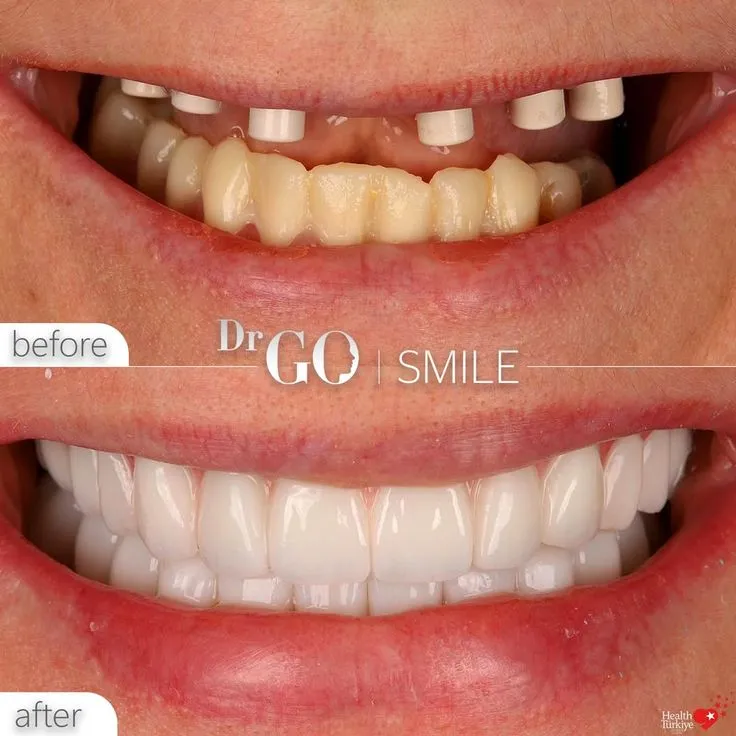
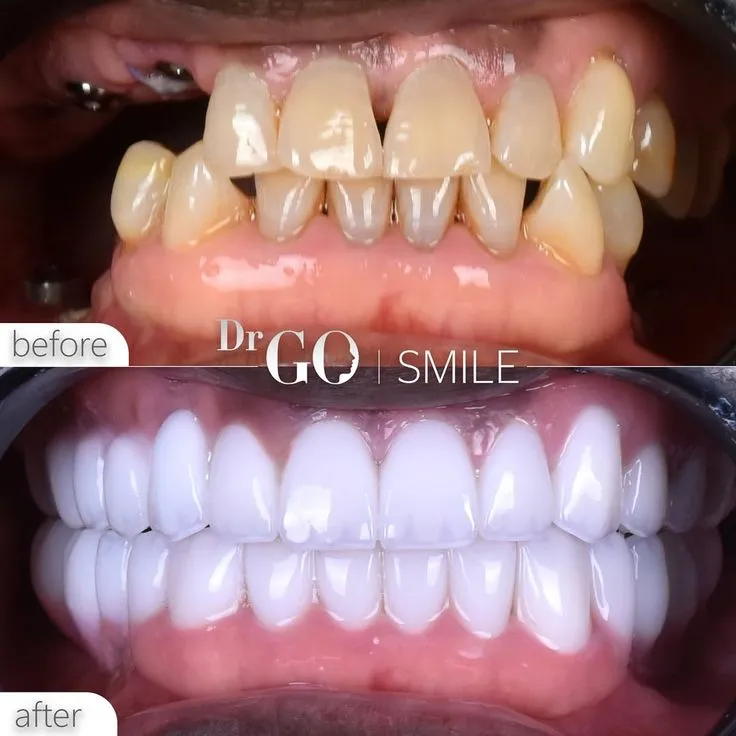
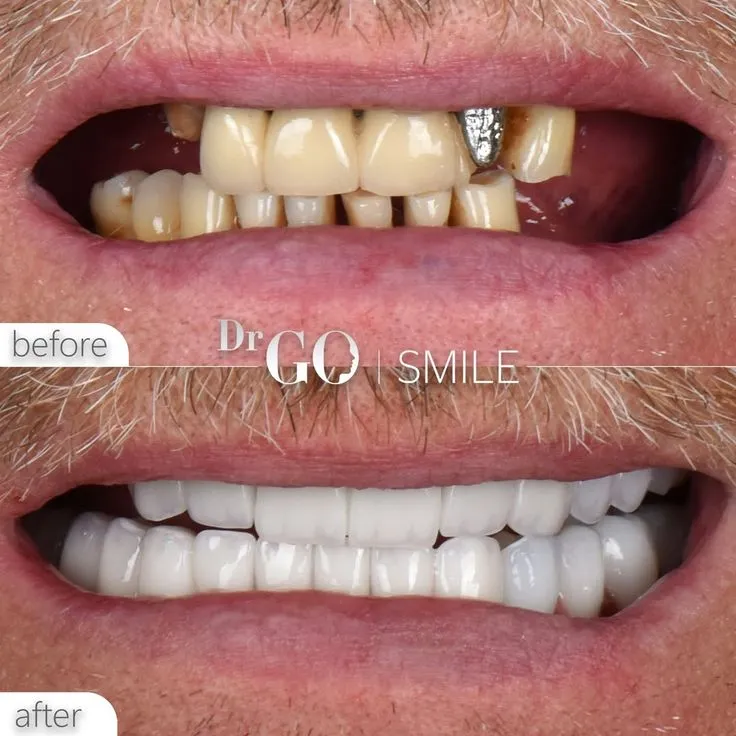
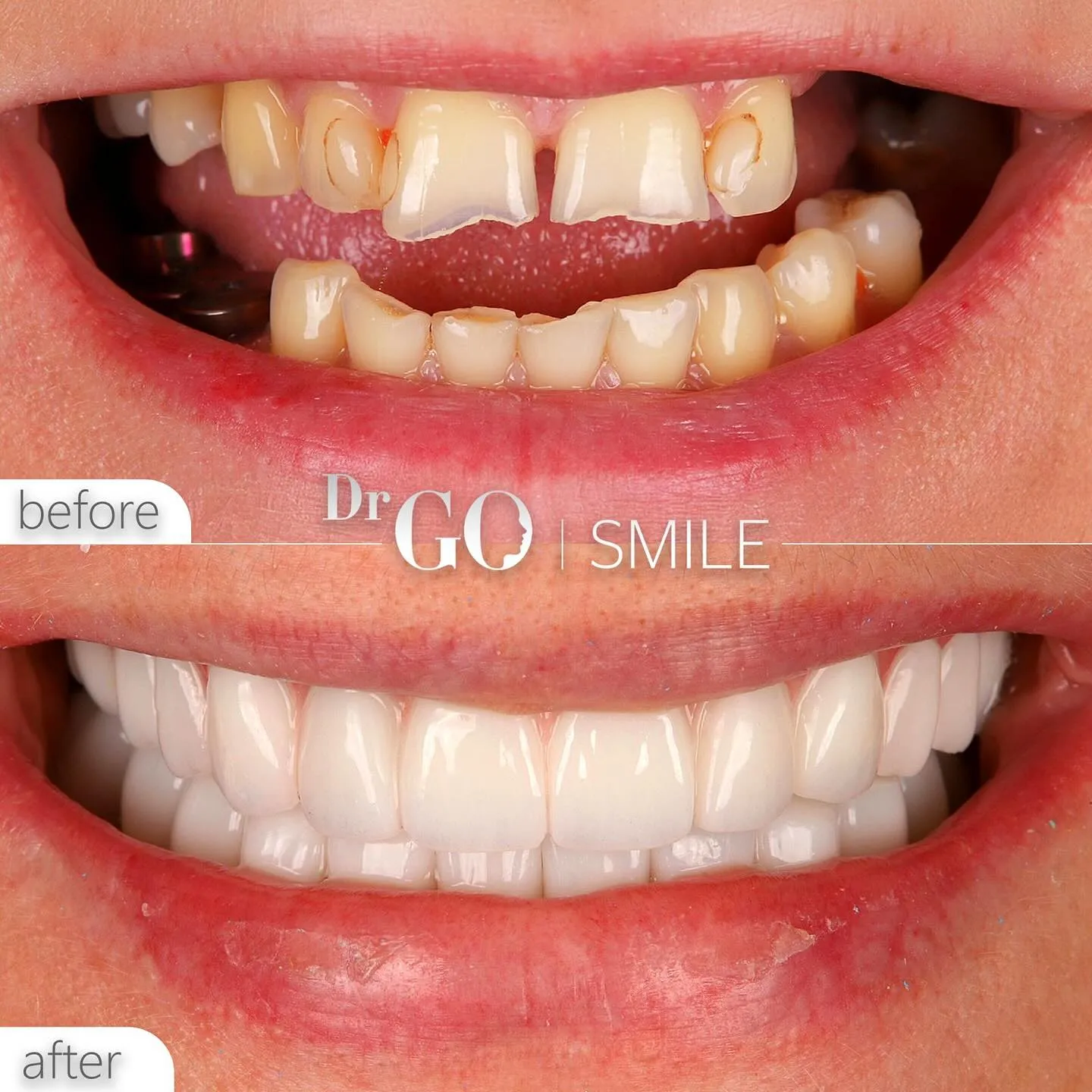
Before-and-after implant treatment can show replacement of missing teeth, improved dental continuity, and changes in smile appearance. Once restored, a Dental Implant should be evaluated for more than its visible cosmetic result.
Implant position, gum health, bone support, bite, cleaning access, and the relationship with neighboring teeth are important measures of treatment quality.
Front-tooth implant cases can require careful management of gum contours because small differences may be noticeable when smiling. Posterior implants place greater emphasis on chewing function and load distribution.
Photographs alone cannot demonstrate bone integration or long-term tissue health. Clinical examinations and appropriate imaging may therefore form part of follow-up after treatment is completed.
Single Tooth Dental Implant
A single-tooth implant replaces one missing tooth without necessarily using adjacent teeth for support. In this approach, one Dental Implant is placed in the missing-tooth site and later restored with an individual crown.
The technique can be particularly useful when neighboring teeth are healthy and would otherwise need preparation for a conventional bridge.
Successful treatment requires enough bone around the planned implant and adequate space between neighboring roots. Front-tooth cases also require careful consideration of gum contours and implant depth for aesthetic reasons.
The implant-supported crown does not develop decay, but neighboring natural teeth remain susceptible. The tissues around the implant also require regular cleaning to reduce the risk of peri-implant inflammation and bone loss.
Multiple Dental Implants
Multiple implants can replace several missing teeth without necessarily placing one implant for each absent tooth. Strategically positioned Dental Implants can support an implant bridge spanning several missing-tooth spaces.
The number and position of implants depend on bone availability, missing-tooth distribution, bite forces, prosthetic design, and anatomical structures such as nerves and sinuses.
This approach can avoid removable dentures in selected patients and does not require natural neighboring teeth to support the replacement bridge.
Cleaning access remains important. Larger implant-supported restorations can create areas where plaque accumulates unless patients use appropriate interdental cleaning methods. Long-term treatment planning should therefore consider maintainability as well as strength and appearance.
Full Mouth Dental Implants
Full-mouth implant rehabilitation replaces most or all missing teeth using implant-supported prostheses. Rather than using one implant per tooth, several Dental Implants can be strategically distributed across each jaw to support a fixed or removable full-arch restoration.
The exact number depends on bone quality, anatomy, implant positions, bite forces, and prosthetic design. Some patients require bone grafting before or during treatment.
Temporary fixed teeth may sometimes be provided shortly after surgery when adequate implant stability and clinical conditions are present. Immediate loading is not appropriate in every case.
Full-mouth treatment requires detailed planning because implant placement and final tooth position must work together. Long-term cleaning, prosthetic maintenance, bite management, and monitoring of surrounding bone remain necessary.
Dental Implants vs Dental Bridges
Implants and conventional bridges replace missing teeth using different methods of support. A Dental Implant is anchored within the jawbone, while a traditional bridge commonly relies on prepared natural teeth positioned beside the missing space.
An implant can preserve neighboring healthy tooth structure because those teeth may not need crown preparation. However, implant treatment requires surgery and sufficient bone.
A conventional bridge can sometimes be completed more quickly and may be appropriate when adjacent teeth already require crowns. Bridges also avoid implant surgery but place restorative demands on supporting teeth.
Neither option is universally superior. Bone availability, neighboring tooth condition, gum health, medical factors, treatment time, cost, aesthetics, and long-term maintenance should all influence the decision.
Dental Implants vs Dentures
Dental implants provide support from within the jawbone, while conventional dentures primarily rest on gums and underlying oral tissues. Strategically placed Dental Implants can also be used to stabilize removable dentures or support fixed full-arch restorations.
Traditional dentures avoid implant surgery and may be appropriate when medical, anatomical, or financial factors limit implant treatment. However, removable dentures can move during eating or speaking and may become less stable as oral tissues change.
Implant-supported options can improve stability and chewing efficiency in selected patients. They still require cleaning and professional maintenance.
The appropriate solution depends on bone availability, health, dexterity, expectations, anatomy, and the desired type of restoration. Some patients benefit from combining implants with removable prosthetic designs.
Dental Implant Side Effects and Risks
Temporary swelling, bruising, tenderness, mild bleeding, and discomfort can occur after implant surgery. During healing around a Dental Implant, patients may also notice temporary gum sensitivity or altered sensation near the surgical area.
Potential complications include infection, poor osseointegration, implant mobility, gum recession, peri-implant inflammation, and progressive bone loss. Mechanical problems such as screw loosening, crown fracture, or prosthetic damage can also occur.
Implant placement near nerves or sinus structures requires careful planning because anatomical injury can produce more serious complications.
Smoking, uncontrolled periodontal disease, poor oral hygiene, and certain health conditions can increase risk. Persistent numbness, severe pain, fever, pus, unusual swelling, or implant movement requires prompt professional assessment.
Dental Implant Aftercare
Aftercare begins with protecting the surgical area and following individualized cleaning instructions. During early healing, tissues around a Dental Implant should be kept clean without aggressive brushing or unnecessary trauma to the surgical site.
Prescribed medications or mouth rinses should be used according to professional instructions. Diet may also be temporarily modified to reduce pressure on the treated area.
Long-term care becomes increasingly important after the final restoration is fitted. Implant crowns and bridges require effective plaque removal around their margins and supporting tissues.
Regular dental assessment can identify inflammation, bite problems, prosthetic wear, or bone changes before they become advanced. Implants cannot develop cavities, but the surrounding tissues can develop disease capable of threatening implant stability.
What to Avoid After Dental Implant Surgery
Activities that disturb the surgical site or interfere with healing should be limited during early recovery. After placement of a Dental Implant, patients should avoid unnecessary touching, aggressive rinsing, and chewing hard foods directly over the treated area according to postoperative instructions.
Smoking is particularly relevant because it can negatively affect wound healing and implant outcomes. Excessive alcohol can also interfere with recovery and prescribed medications.
Heavy physical activity may be temporarily restricted when it increases bleeding, throbbing, or swelling. Patients should also avoid manipulating stitches or surgical wounds with the tongue or fingers.
Restrictions vary when bone grafting or sinus procedures accompany implant placement. Individual surgical instructions should therefore take priority over general postoperative advice.
Dental Implants in Turkey
Turkey is a common destination for implant dentistry, including single-tooth replacement and full-mouth rehabilitation. Patients considering Dental Implants in Turkey should evaluate diagnosis, implant planning, bone assessment, surgical standards, prosthetic design, material documentation, and arrangements for long-term follow-up.
Implant treatment can require multiple stages separated by healing periods. Travel schedules should therefore reflect biological healing rather than forcing every stage into a short visit.
Patients should understand which implant system and prosthetic materials are being used and how future components can be serviced if necessary.
Price alone should not determine treatment. Bone grafting requirements, implant position, gum health, final restoration design, bite forces, and maintenance access can have significant effects on long-term outcomes.
Dental Implant Prices 2026
Dental implant costs in 2026 varied according to implant numbers, restoration type, bone condition, treatment complexity, and whether additional surgical procedures were necessary. When reviewing historical Dental Implant prices for 2026, it is important to distinguish the cost of the implant fixture from the total treatment involving the abutment and final restoration.
Frequently Asked Questions
Are dental implants permanent?
Implants are designed as long-term tooth replacements, but lifetime survival cannot be guaranteed. Once successfully integrated, a Dental Implant may remain functional for decades, although surrounding tissues and prosthetic components still require ongoing maintenance.
How long do dental implants last?
Longevity varies according to bone support, oral hygiene, smoking, medical factors, bite forces, and maintenance. With healthy surrounding tissues, a Dental Implant can function for many years, while crowns, screws, or other restorative components may need earlier replacement.
Is getting a dental implant painful?
Local anesthesia is normally used to control pain during implant placement. While receiving a Dental Implant, patients may feel pressure or vibration, while temporary soreness, swelling, and tenderness can develop after the anesthetic wears off.
How long does it take to recover from a dental implant?
Initial soft-tissue recovery is considerably faster than complete integration with the jawbone. After placement of a Dental Implant, everyday discomfort often improves progressively, while osseointegration can require several months before final restoration or unrestricted loading in some cases.